
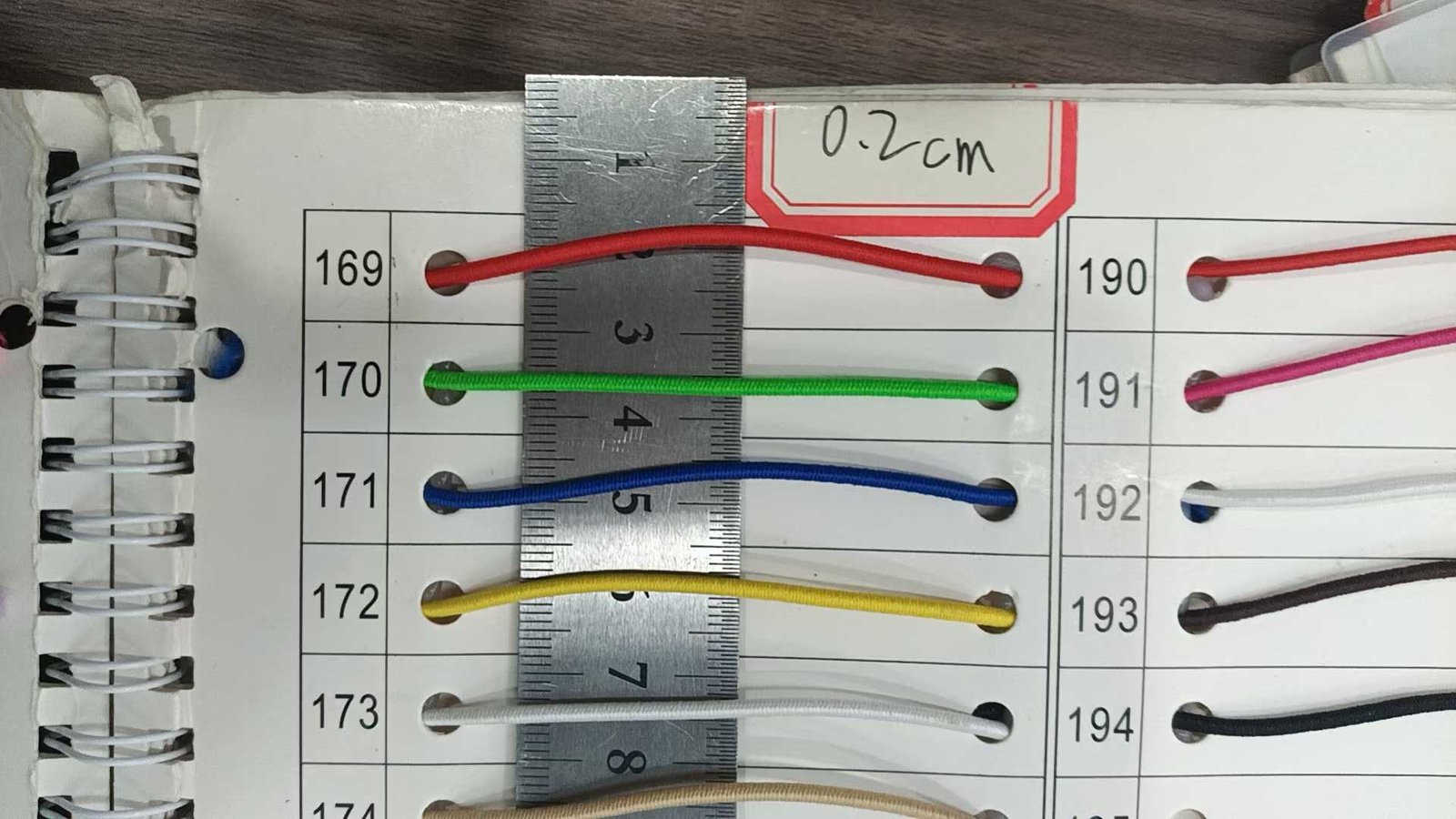
Not sure which round elastic cord diameter to choose? It is a question we often receive at KEYIDI TEXTILE. We photographed several commonly used sample sizes alongside a ruler to help fashion brands, designers and buyers compare the options.
For women’s woven garments, selecting a small trim still requires a clear specification. These photos provide a starting point for comparing diameter; the final choice needs to be checked in the intended garment detail.
Round elastic cord sizes in the photos
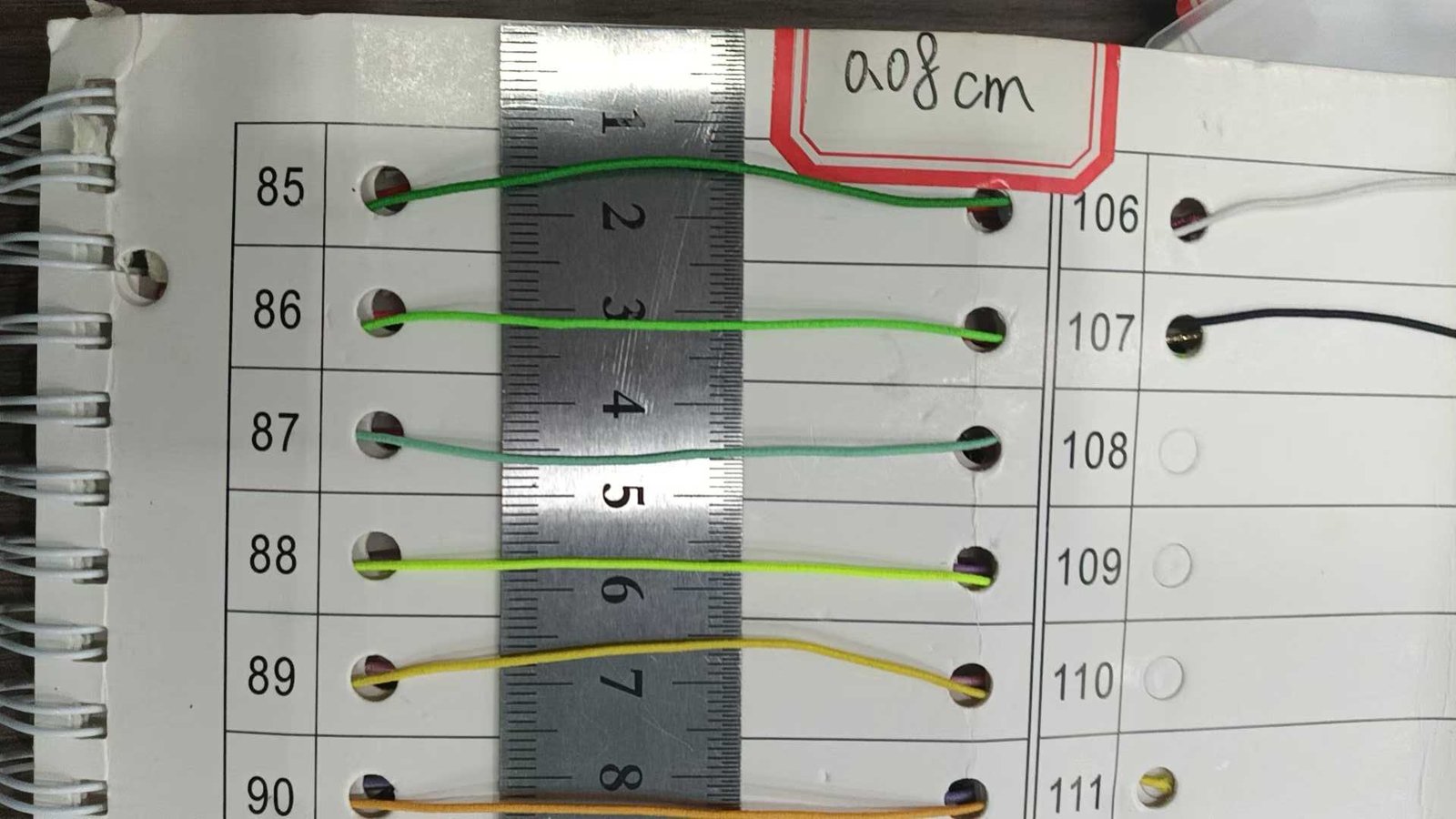
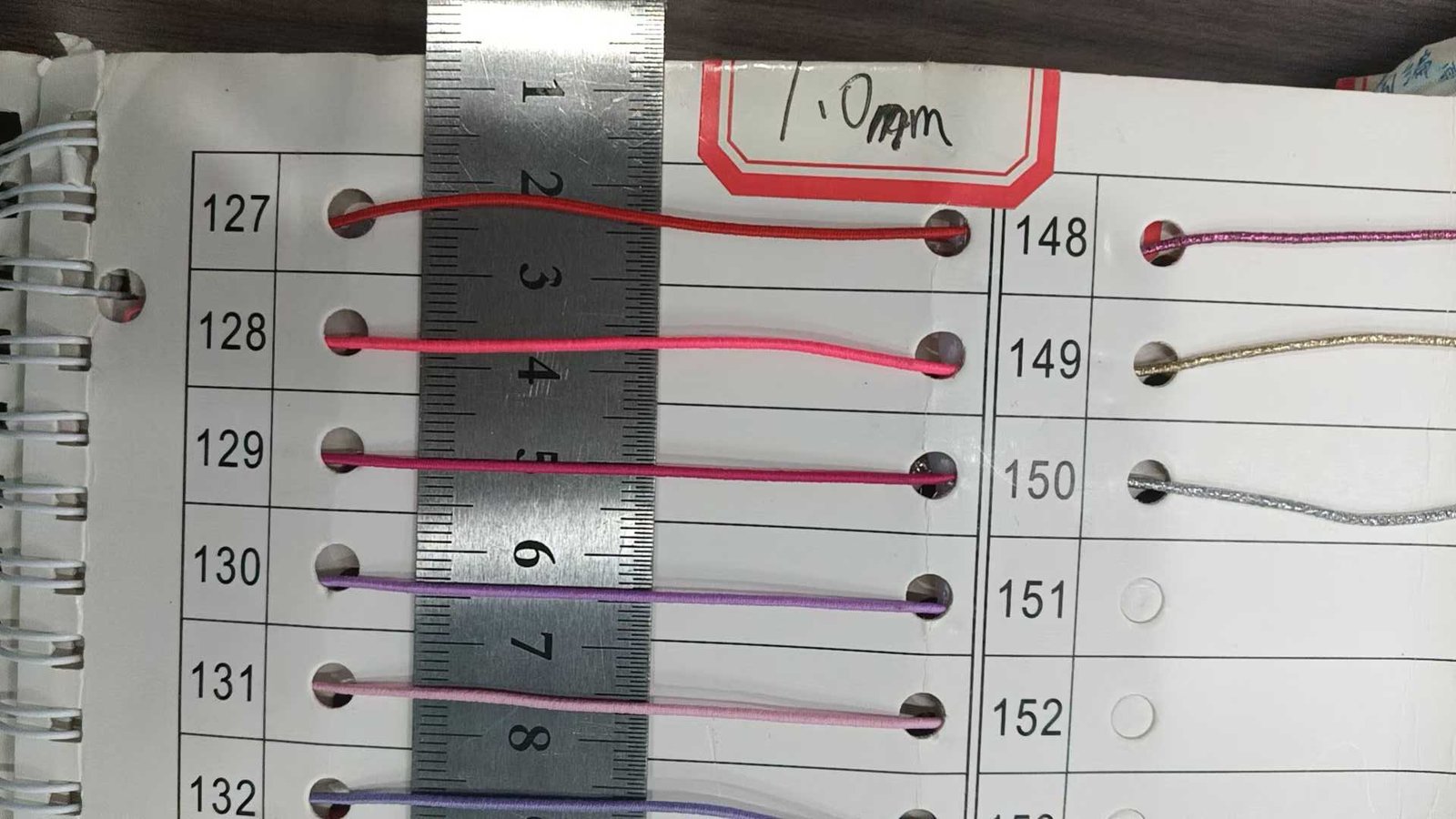
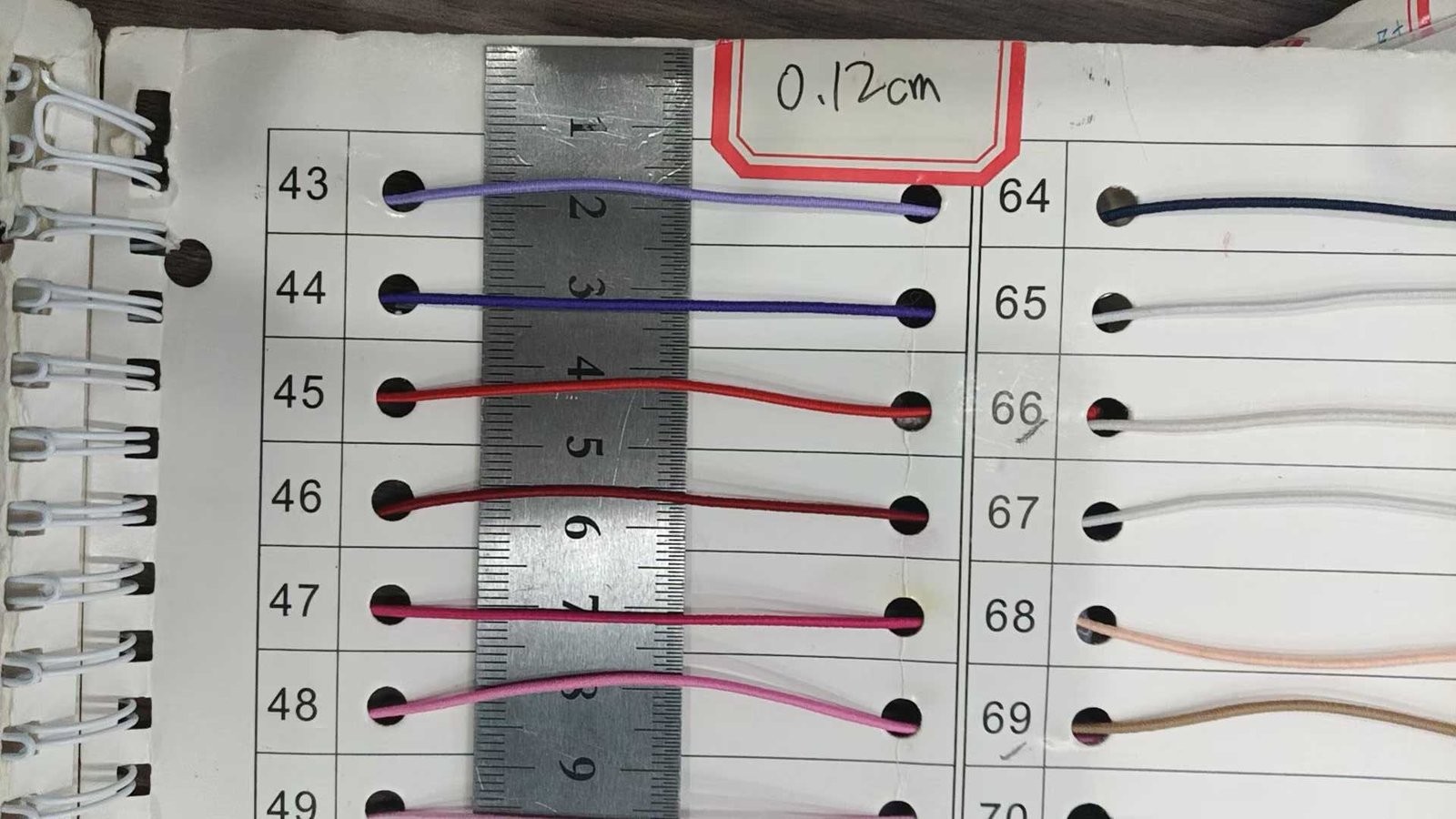
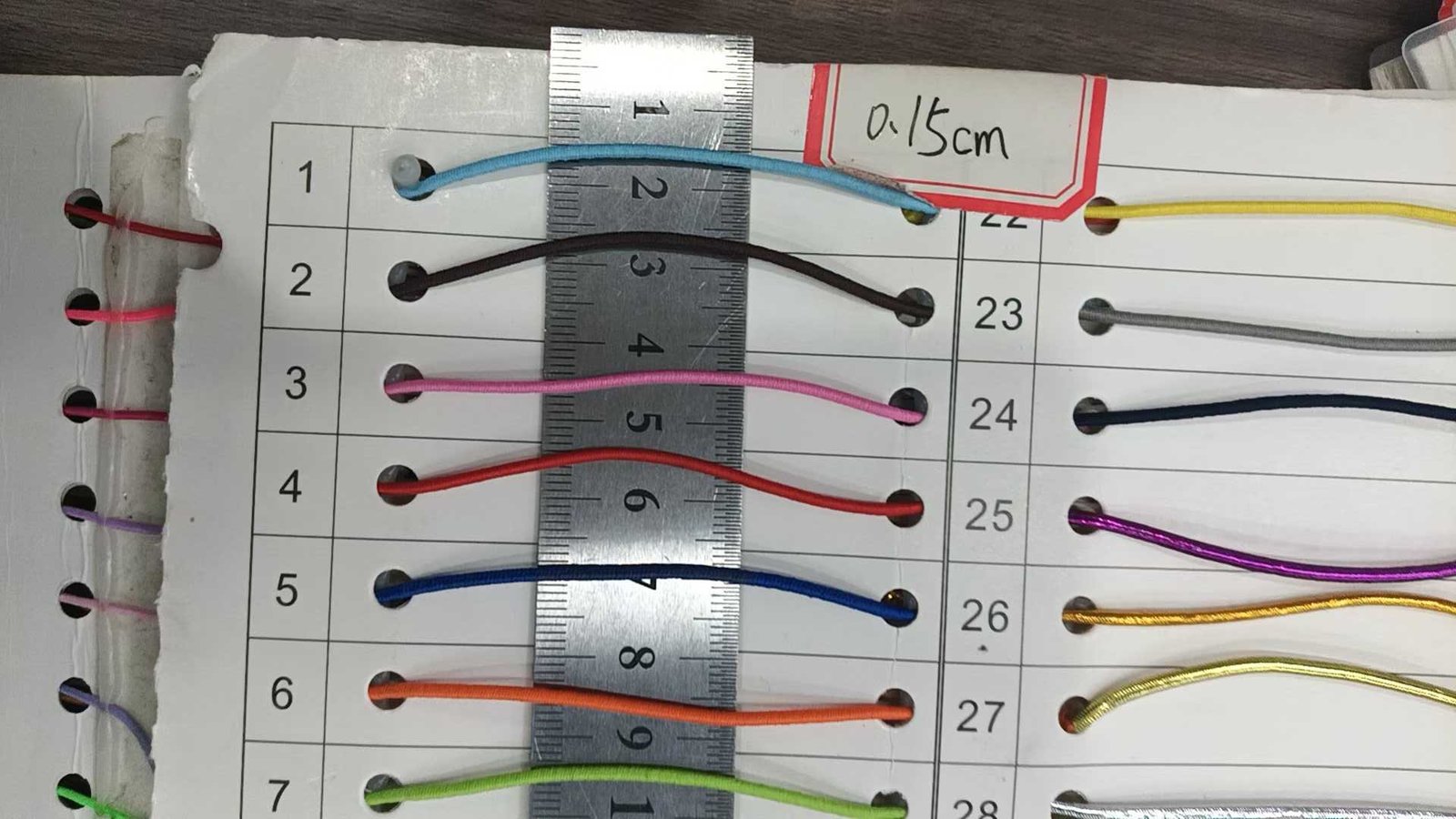
The sample cards are labeled 0.8 mm, 1.0 mm, 1.2 mm, 1.5 mm and 2.0 mm. Some original labels use centimeters: 0.08 cm equals 0.8 mm, 0.12 cm equals 1.2 mm, 0.15 cm equals 1.5 mm, and 0.2 cm equals 2.0 mm.
These are the nominal sizes shown in this photo set, rather than a complete availability list. The ruler provides visual context. Camera angle and screen size affect apparent thickness, so the photos should not be used as precision measurements or a color standard.
Check the opening and the finished assembly
Begin with the opening, loop or channel the cord needs to pass through. Check clearance using the actual materials and intended assembly method. A folded or joined end may need more space than a single strand.
For a button-loop detail, for example, assess the loop together with the selected button, attachment and fabric. Confirm that the finished detail can be used as intended and holds securely. A diameter alone does not establish suitability. For the broader specification, see our guide to garment closure design.
Compare stretch and recovery, not just diameter
Two cords with the same nominal diameter can feel different because their materials and construction may differ. Compare resistance when stretched and recovery after release using physical samples.
A thicker cord should not automatically be treated as stronger or more suitable. Check the performance required by the garment rather than choosing from appearance alone.
Test the attachment in your garment
Consider whether the cord will be sewn, knotted, looped or fitted with another component. Test that finishing method with the intended fabric, and review the attachment, appearance and ease of use.
Where washing or other care is expected, evaluate the assembled detail against the garment’s intended care requirements. These photographs do not establish fiber composition, wash performance or durability.
Record the approved trim specification
- Nominal diameter in millimeters and agreed tolerance.
- Approved physical sample or supplier reference.
- Color reference confirmed using a physical sample.
- Required material and stretch characteristics.
- Cut length, loop dimensions and attachment method, where applicable.
- Relevant care and performance requirements.
Keep these details in the garment specification and use the approved sample when reviewing production. Confirm availability and order requirements for the selected cord rather than assuming that every size and color in a sample card is currently stocked.
What to prepare for a sourcing discussion
An existing cord sample, the intended application and the opening dimensions can help narrow down the options. A product photo can support an initial discussion, but it does not replace a complete development specification.
For formal garment development with KEYIDI TEXTILE, provide a complete production-ready tech pack/specification or a physical reference garment. Concept sketches and inspiration images alone are insufficient to start development.
Ready to Discuss Your Next Collection?
Send your garment brief, tech pack or physical sample details, fabric requirements, and target quantities for review.
Formal development requires a complete production-ready tech pack with specifications, or a physical sample garment. Concept sketches alone are not sufficient to start development.
Send Production Enquiry ↗Or email us directly at info@keyiditextile.com