
Garment closure design begins with how the wearer gets into, secures and removes the garment. A fashion sketch may show a smooth back or uninterrupted neckline while concealing the opening that makes the design usable. That opening must be resolved before the style can become a complete development brief.
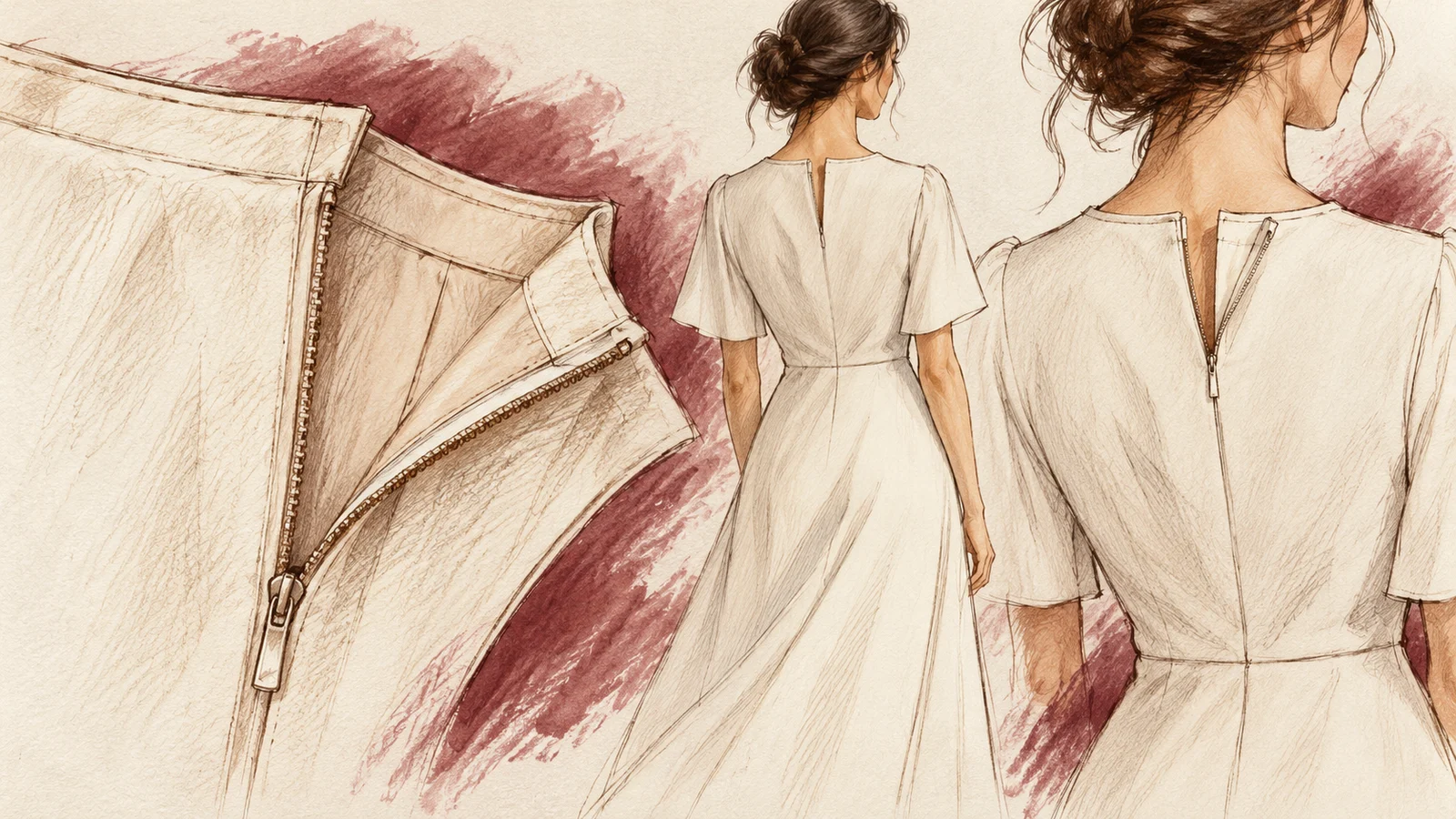
Trace the dressing route
Identify where the garment opens and which body areas must pass through it. Consider the intended fit, fabric behaviour and wearer use. A narrow woven neckline cannot be assumed to work as a pull-on opening simply because no closure is visible in the illustration.
For an illustrative fitted dress with a clean front, the designer must decide where the actual opening belongs. A side or back closure may preserve the front appearance, but each option creates a different construction and use question. Record the selected route.
Distinguish decoration from function
State which buttons, ties, buckles or snaps operate and which are decorative. Show the open and closed arrangement where an overview is insufficient. Identify fastening orientation from the wearer’s perspective when the distinction matters.
A row of buttons on a flat should not leave the recipient guessing whether there are working buttonholes. Likewise, a belt can shape the garment, secure a wrap or serve as a styling accessory. Define its role and attachment.
Specify the closure as part of the construction
Link the fastening reference to the material list. Define its location, relevant dimensions, visible or concealed treatment and the surrounding construction. A zip name alone does not describe the opening length, top finish or relationship to a waist seam.
Use detail views for internal underlaps, guards, facings or reinforcement where required by the design. The exact construction needs technical review against the material and use; adding support without testing can alter bulk and appearance.
Check appearance and operation separately
A closure may look neat while being awkward to use, or operate easily while distorting the garment. Review both questions in the sample. Observe the closed garment under relevant movement and check the opening route under appropriate fitting conditions.
If the garment is temporarily pinned or uses a substitute fastening, note the limitation. A substitute can help test an early idea while leaving the final trim and opening construction unapproved. Record which decisions the sample actually supports.
Keep the closure consistent across the brief
Compare front, back, detail views, measurements and trim entries. Resolve any conflict between an illustration showing buttons and a specification calling for a zip. Identify which document revision governs instead of relying on an informal message to override the pack.
Use our guides to technical flats from a sketch and wrap-dress overlap and fastening for related examples.
Include the closure requirements in the complete tech pack or identify them on a physical reference garment when approaching KEYIDI TEXTILE. The woven-apparel tech pack checklist helps connect trims with the full style specification.
Ready to Discuss Your Next Collection?
Send your garment brief, tech pack or physical sample details, fabric requirements, and target quantities for review.
Formal development requires a complete production-ready tech pack with specifications, or a physical sample garment. Concept sketches alone are not sufficient to start development.
Send Production Enquiry ↗Or email us directly at info@keyiditextile.com