
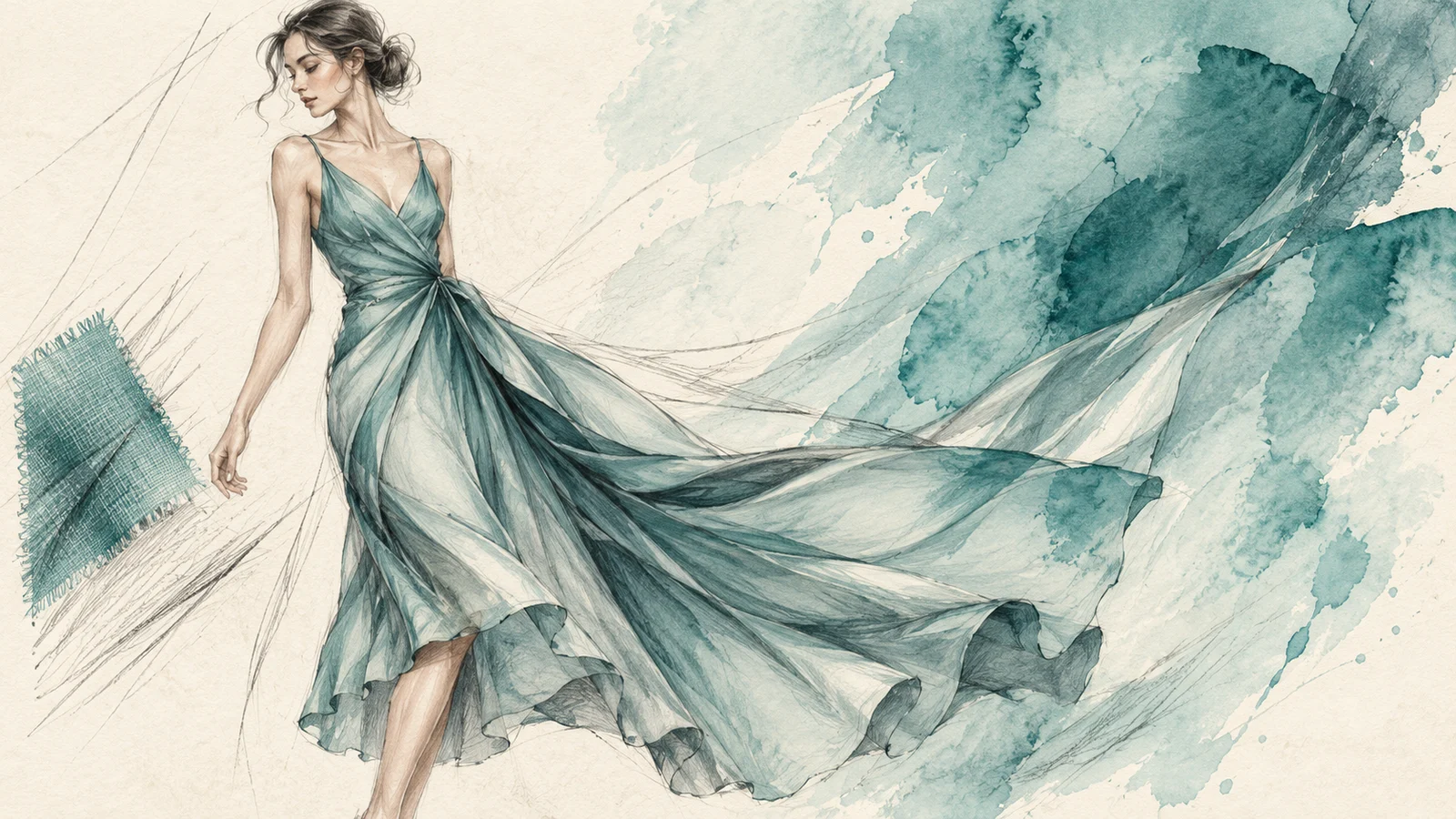
A fluid fashion sketch does not establish that a dress should be cut on the bias. Similar drawn folds can suggest different material and construction solutions. Bias-cut dress design requires an explicit decision about grain direction, followed by a trial of the chosen fabric and pattern.
Identify the grain decision rather than guessing from the image
In a woven fabric, lengthwise and crosswise yarn directions provide reference axes. True bias runs diagonally at 45 degrees to them. Fabric response on that direction differs from response along the yarns, but the amount and practical effect depend on the particular material and construction.
Mark the intended grain direction on the pattern information. Do not infer it from a diagonal stripe, a moving pose or a shaded fold in a reference image. A fluid visual target and a confirmed cutting direction are separate decisions.
Make the material trial answer a specific question
Ask what the bias direction is expected to contribute: a closer hanging outline, a particular fold or another defined effect. Identify the actual fabric reference, finish and relevant material status. Test the proposed arrangement rather than assuming every satin or lightweight cloth will behave alike.
For an illustrative slip-style dress, compare the intended side-seam position, neckline and hem after the sample has been handled and hung under agreed conditions. Record those conditions. There is no single hanging duration that this article can prescribe for every material or style.
Review seams and edges as part of the silhouette
A long seam or neckline edge can influence how the garment hangs. Inspect the proposed seam construction and edge finishing in the actual material. If an area ripples or distorts, document the location and ask the technical team to investigate the cause.
A study on seam angle and puckering in lightweight woven fabrics reports material-dependent results. It supports the limited point that angle and fabric must be considered together; its findings are not a universal cutting-angle prescription for a dress.
Separate temporary handling effects from the approved result
Record whether the sample has been freshly pressed, pinned, clipped or otherwise adjusted for presentation. Compare the garment under consistent conditions. If the design requires a care process, evaluate the relevant result rather than relying only on the newly made sample.
Changes in hanging length or edge appearance may call for pattern, material or construction review. Do not correct the visible symptom in an isolated photograph and assume the underlying issue is resolved.
Prepare a brief that permits an informed review
Include the design intent, front and back technical views, grain information, material reference, measurements, seam and edge requirements, and the planned sample checks. Ask the manufacturer to assess the particular style and scope. This article does not establish that any specific bias-cut construction has already been accepted for production.
Our guides to choosing fabric from a sketch and dress silhouette development cover related design decisions. KEYIDI TEXTILE’s sampling requirements explain the complete tech pack or physical sample needed for project review.
Ready to Discuss Your Next Collection?
Send your garment brief, tech pack or physical sample details, fabric requirements, and target quantities for review.
Formal development requires a complete production-ready tech pack with specifications, or a physical sample garment. Concept sketches alone are not sufficient to start development.
Send Production Enquiry ↗Or email us directly at info@keyiditextile.com