
Blouse collar and neckline design connects a visible outline with a functional opening. A drawing can show an elegant collar point without revealing the stand, facing or fastening that helps it sit correctly. Resolve those relationships before treating the sketch as a sample instruction.
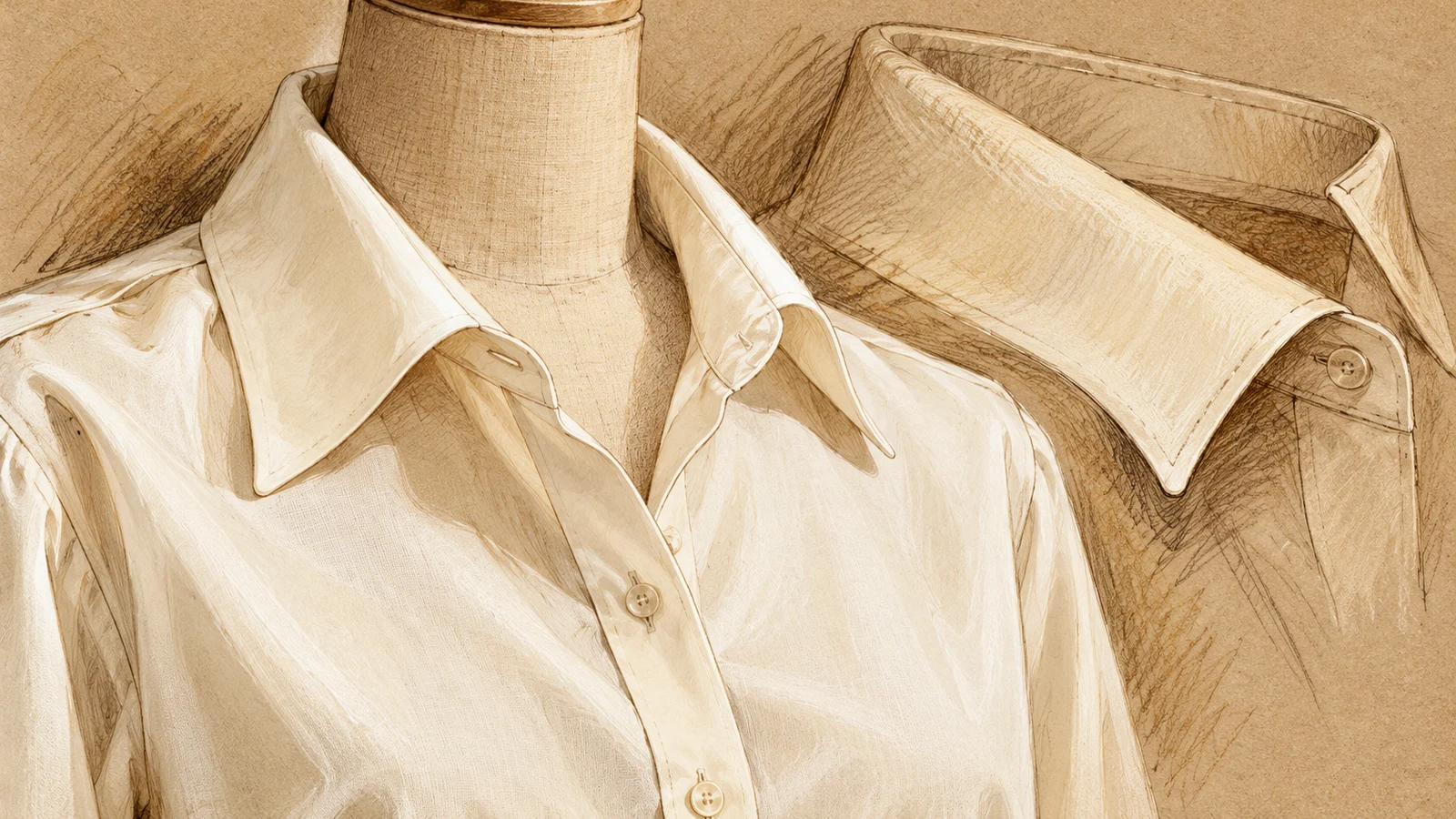
Separate the neckline from the collar attached to it
The neckline is the opening in the garment body. A collar is an additional design and construction element related to that opening. Identify whether the style has a separate stand, an integrated construction, a band or no collar. A style name can introduce the idea, but it should not replace a clear drawing.
Show the back neckline and how it meets the shoulder. If the front neckline changes, review the whole opening rather than editing only the visible front curve. Define depth and width with named measurement references.
Decide how the wearer uses the opening
Does the blouse button through the front, open partly, fasten at the back or pull over the head? Explain which buttons are functional. For a small neckline, confirm the intended opening route rather than assuming the wearer can pass through it.
For an illustrative brief, a high band neckline with a short front placket creates two linked questions: is the opening sufficient for dressing, and how does the band sit when fastened? Both belong in the sample review.
Draw the parts that affect the visible result
Include collar-point shape, stand or band, front overlap and relevant topstitching. Add an inside view for the facing or binding when the finish matters. Mark the intended finished edge separately from a fold or roll indication.
Use callouts to describe the chosen construction and material references. “Soft collar” leaves open whether softness comes from the shell, an interlining choice, construction or the absence of support. State the proposal and test the assembled result.
Test the collar as an assembled detail
Examine the collar with the proposed body fabric, support and fastening. Review the garment both open and closed if both are intended wearing options. Observe the roll, edge appearance and relationship to the neck; photographs should identify which condition they show.
If a sample collar twists, collapses or stands away unexpectedly, record the observation and ask for technical review. The outline alone cannot establish whether the cause is pattern shape, material behaviour or making. Avoid changing several factors without recording which question each change addresses.
Make approval specific
Approve the collar shape, construction and material combination within an identified sample and revision. A previous collar approval may need review if the fabric or support changes. Carry the selected details into both the drawing and the material list.
Read how to develop technical flats for the drawing system, and how to investigate fabric behaviour for the material questions.
KEYIDI TEXTILE reviews women’s woven blouse projects from a complete tech pack or physical sample garment. Include the neckline, collar and opening information with the rest of the style documentation when you submit a manufacturing enquiry.
Ready to Discuss Your Next Collection?
Send your garment brief, tech pack or physical sample details, fabric requirements, and target quantities for review.
Formal development requires a complete production-ready tech pack with specifications, or a physical sample garment. Concept sketches alone are not sufficient to start development.
Send Production Enquiry ↗Or email us directly at info@keyiditextile.com