
Puff sleeve design development starts with the location of fullness. A sleeve that expands near the shoulder is different from one that balloons above a cuff, even if both look rounded in a fashion illustration. Define the position and control of that volume before asking a patternmaker to interpret the outline.
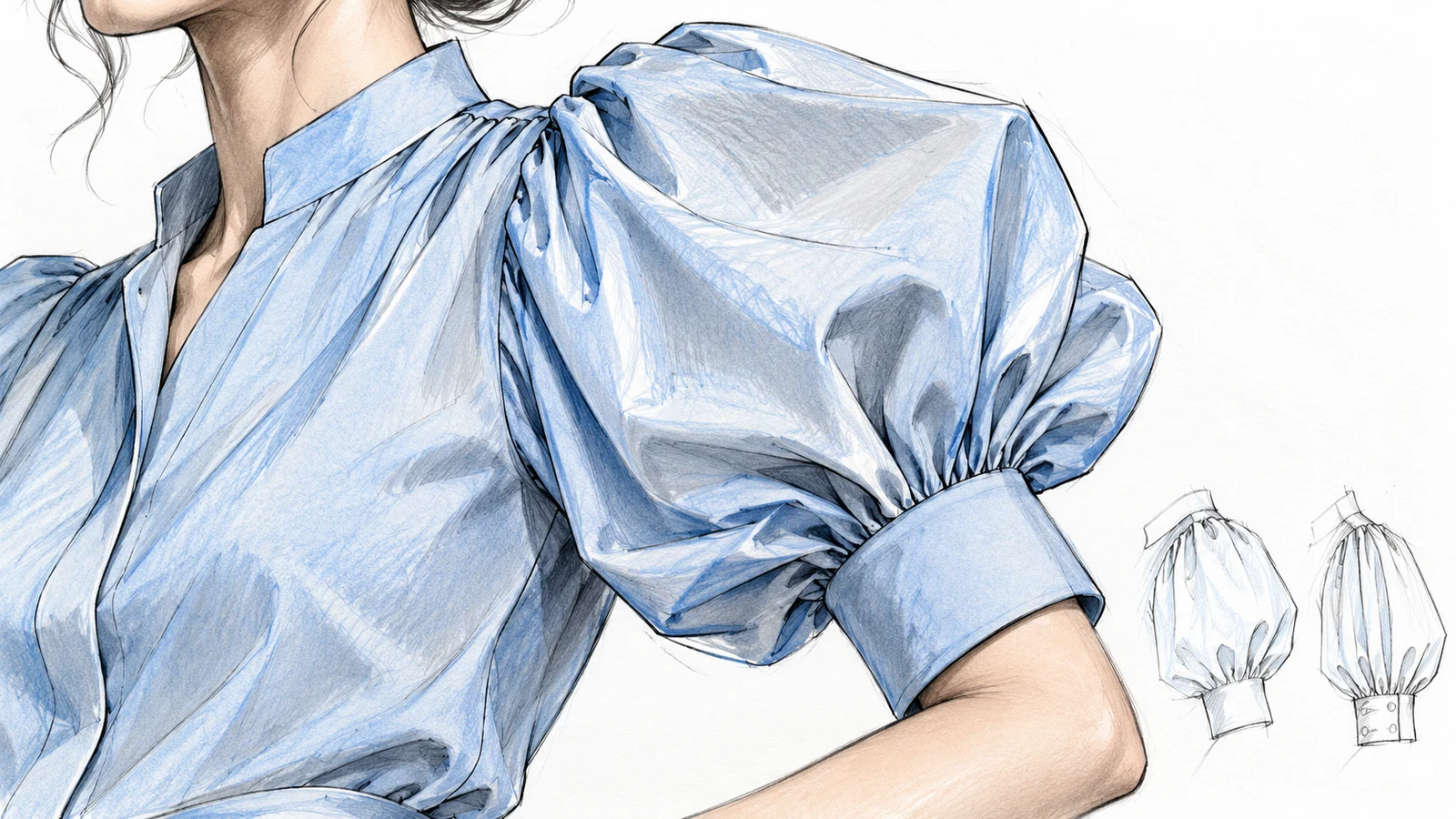
Describe where the volume begins and ends
Mark the sleeve cap, upper arm, elbow and opening as relevant. State whether fullness is gathered at the cap, the lower edge or both. SCERT Kerala’s Fashion and Apparel Designing reference book, in its sleeve-variation section, distinguishes these gathering locations. That basic distinction is useful before any style-specific measurements are set.
Do not use a shaded curve as the only instruction. Add a neutral front view and a side or detail view that shows where the sleeve should project. Identify whether the apparent shoulder width belongs to the body pattern, the sleeve volume or both.
Specify how the edges control the fullness
A cuff, elastic channel, binding or other edge treatment changes how the sleeve is held. Define the selected treatment and its finished dimensions or agreed adjustment method. Identify any opening and fastening needed for the hand to pass through.
For an illustrative blouse brief, “rounded lower sleeve, gathered into a buttoned cuff” communicates more than “romantic puff sleeve.” It still needs the cuff measurements, sleeve dimensions, material and construction details before sampling.
Investigate fabric and support together
A crisp candidate fabric may hold a different outline from a fluid one. Extra support can also change the appearance and feel. Review the actual combination, including any lining or supporting layer, instead of assuming the shell fabric’s name predicts the volume.
A small gathered trial helps inspect bulk at the seam. A complete sleeve trial addresses different questions, including its relationship to the armhole. Keep those tests distinct: a successful gathered swatch does not approve sleeve fit.
Include movement in the sample brief
State the garment’s intended use and check relevant movement during fitting. Observe the sleeve when the arm hangs, bends and reaches as appropriate. Record whether the cuff remains comfortable and whether the sleeve shifts the bodice or neckline.
If the result differs from the drawing, describe the difference before prescribing a correction. A sleeve that appears too wide might need a change in volume distribution, material or support rather than a uniform reduction. The responsible patternmaker should review the cause.
Approve the relationship, not an isolated photograph
Review the sleeve with the whole blouse or dress. A dramatic sleeve may work in close-up but alter the overall balance. Compare front, side and back views under the same fitting conditions, then update the current drawing and specification.
Our guides to choosing fabric from a sketch and proportion and measurements cover the connected decisions. No universal gathering ratio guarantees a particular puff sleeve in every fabric.
For KEYIDI TEXTILE review, include this sleeve information within a complete tech pack or provide a physical sample garment with identified changes. See our garment sampling requirements before submitting the style.
Ready to Discuss Your Next Collection?
Send your garment brief, tech pack or physical sample details, fabric requirements, and target quantities for review.
Formal development requires a complete production-ready tech pack with specifications, or a physical sample garment. Concept sketches alone are not sufficient to start development.
Send Production Enquiry ↗Or email us directly at info@keyiditextile.com