
Dress silhouette development begins with where volume sits around the body. A raised waist, a wider skirt or a dropped shoulder changes the relationship between parts of the garment. A sketch makes those relationships easy to compare, but the final outline depends on the pattern, material and any internal support.
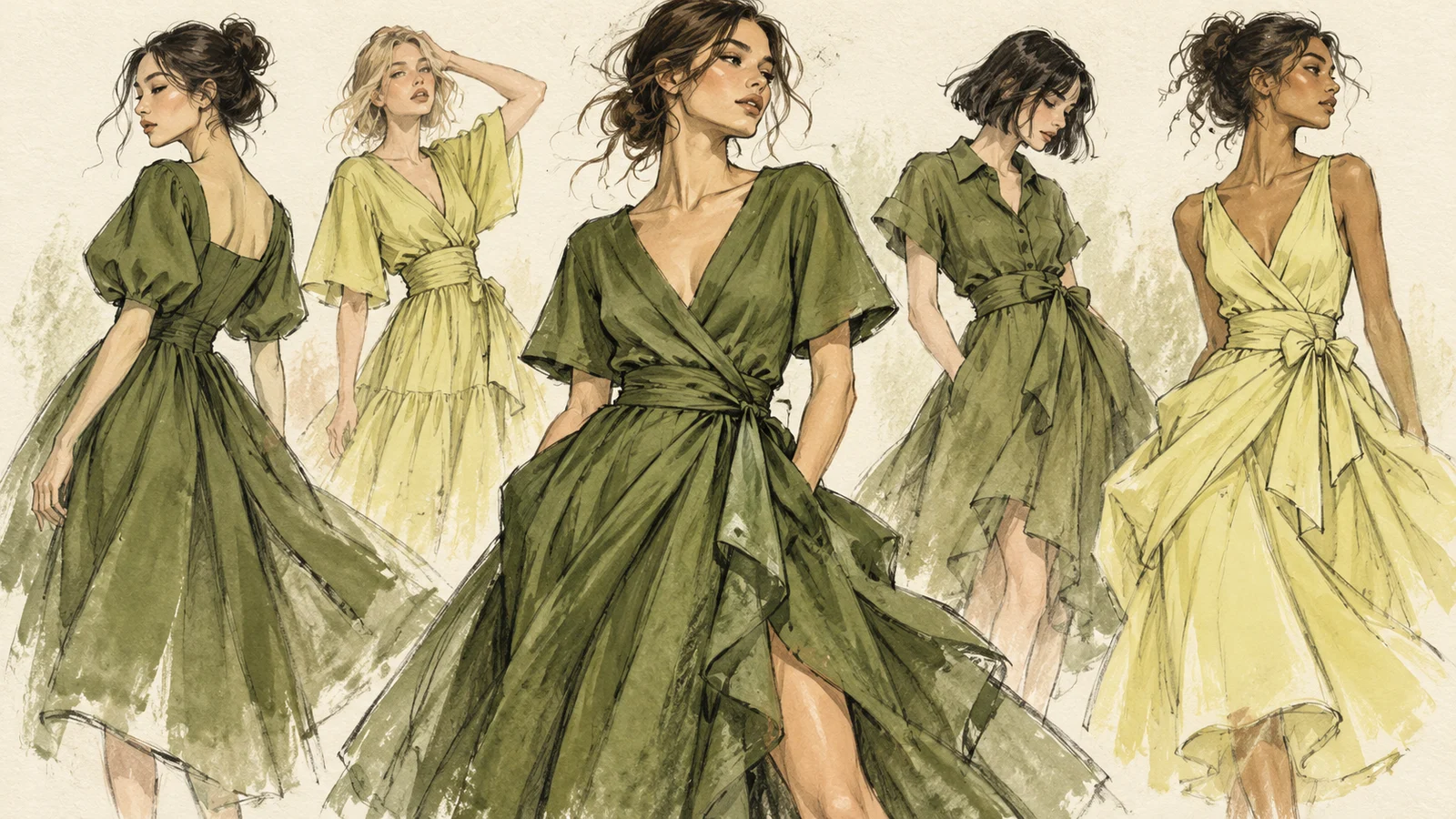
Define the outline before adding surface detail
Draw a simple front and side outline with minimal decoration. Mark the shoulder, intended waist position and hem. Ask where the dress sits close to the body and where it stands away. Then identify what creates that relationship: shaping seams, darts, gathers, panels, a belt or another defined construction.
A belt can change the appearance of a loose dress without making its underlying pattern fitted. Record whether the unbelted shape is part of the intended design. Otherwise, a sample may be judged against an image that only works when styled in one specific way.
Change one variable to make comparisons meaningful
For an illustrative day-dress study, keep the neckline and sleeve constant while comparing three waist positions. Next, keep the selected waist position and compare skirt volume. This staged method makes the reason for a preference easier to explain.
Annotate the options with consequences to investigate. A lower waist seam may alter the apparent body-to-skirt relationship. Additional skirt volume may change the weight carried at the seam. Neither outcome can be fully assessed from the outline alone.
Ask what supports the shape
Historical and formalwear images can be useful for studying volume, but they may depict understructures that are not visible. A dramatic skirt outline cannot be assumed to come from shell fabric alone. Extract the design question—where is the volume held?—without copying an unidentified structure or claiming it is suitable for everyday wear.
For a contemporary woven dress, discuss whether the selected fabric can produce the intended outline with the proposed construction. If the shape requires additional support, specify and trial it. If support conflicts with the intended lightness or comfort, revise the design priority.
Review balance around the body
Use front, back and side views, then examine the trial garment on the agreed body or form. Look at the relationship between waist seam, side seams and hem. Record any pitching, lifting or twisting with the conditions in which it appears.
FIT’s apparel design course descriptions link draping with proportion, balance and three-dimensional prototypes. Our comparison method here is an original way to organise those development questions; it is not a drafting formula.
Issue the selected version as a consistent set
Carry the chosen waist location, volume treatment and back design into the technical views and measurements. Keep alternative drawings as research, clearly separated from the current instruction. State which aspects of a trial sample are approved and which still depend on the final material.
Use the distinction between visual proportion and garment measurements and our guide to fabric behaviour when making the next decisions.
KEYIDI TEXTILE’s manufacturing information concerns women’s woven apparel. For review, prepare a complete tech pack or physical sample garment; an inspirational silhouette study alone is not a production brief.
Ready to Discuss Your Next Collection?
Send your garment brief, tech pack or physical sample details, fabric requirements, and target quantities for review.
Formal development requires a complete production-ready tech pack with specifications, or a physical sample garment. Concept sketches alone are not sufficient to start development.
Send Production Enquiry ↗Or email us directly at info@keyiditextile.com