
Moving from a fashion sketchbook to a capsule collection requires editing. A sketchbook can hold many worthwhile ideas, but a range needs a reason for each garment to exist alongside the others. The useful question is not how many drawings are complete; it is what each style contributes for the intended wearer.
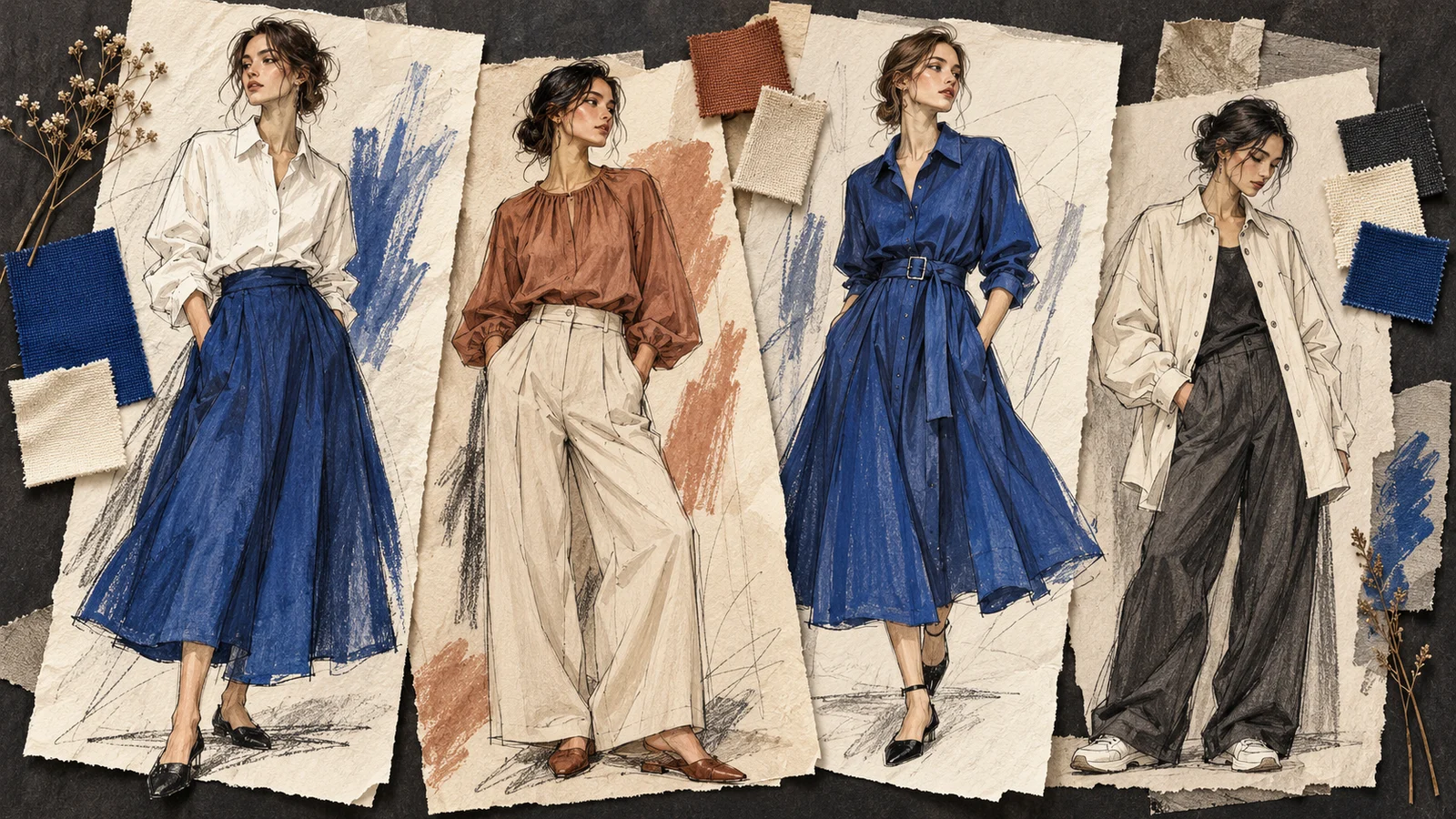
Define the range brief before selecting favourites
Describe the wearer, intended occasions and garment categories. Identify the visual relationship you want between pieces: shared proportions, a recurring detail, a material direction or a colour family. Keep that brief specific enough to reject a drawing that does not belong.
There is no universal number of pieces that makes a successful capsule. Choose a scope that fits the project, then assess both creative coherence and practical development requirements. A collection plan is not evidence of market demand.
Give each style a job
Create a simple range table with style code, category, intended use, key detail and development status. Ask which garments overlap in function and which fill a distinct need. Several different drawings may still represent the same role if their proportions, use and material requirements are nearly identical.
For an illustrative small woven range, a clean blouse, a more expressive blouse and a day dress might each have a different purpose. That is a planning example, not a recommended commercial assortment. The actual selection needs your customer and business context.
Test whether the design language survives simplification
Place neutral flats side by side without poses or accessories. Look for a deliberate relationship between necklines, sleeve shapes, waist positions and hems. If coherence depends entirely on the same illustrated shoes, the garments may need further editing.
Then restore the colour and material proposals. A palette can connect styles, but a coloured sketch does not confirm matching physical materials. Record which material combinations have been checked and which remain visual proposals.
Keep shared components and shared assumptions separate
Related styles may propose the same button, lining or fabric. Identify those proposals in the range plan, then ask whether they are technically suitable for each garment. A material that works for a fluid blouse may not provide the intended dress structure.
Do not assume shared materials guarantee lower prices or minimum quantities. Purchasing conditions, usage, colours and order allocation need a specific review. A range table helps frame that discussion without inventing savings.
Prioritise development by unresolved questions
Mark which styles need a material trial, a difficult construction decision or further fit work. A visually simple garment can contain a substantial unresolved question. Select the next development step by what must be learned, rather than by the polish of the presentation drawing.
Retain rejected ideas in the research record and keep them out of the current instruction set. Give selected styles their own controlled drawings and specifications. One attractive collection board cannot replace separate briefs for distinct garments.
Use sketching as a decision tool and material-behaviour review as you edit. When the selected styles have complete tech packs or physical reference garments, send KEYIDI TEXTILE the range allocation and project requirements for review.
Ready to Discuss Your Next Collection?
Send your garment brief, tech pack or physical sample details, fabric requirements, and target quantities for review.
Formal development requires a complete production-ready tech pack with specifications, or a physical sample garment. Concept sketches alone are not sufficient to start development.
Send Production Enquiry ↗Or email us directly at info@keyiditextile.com