
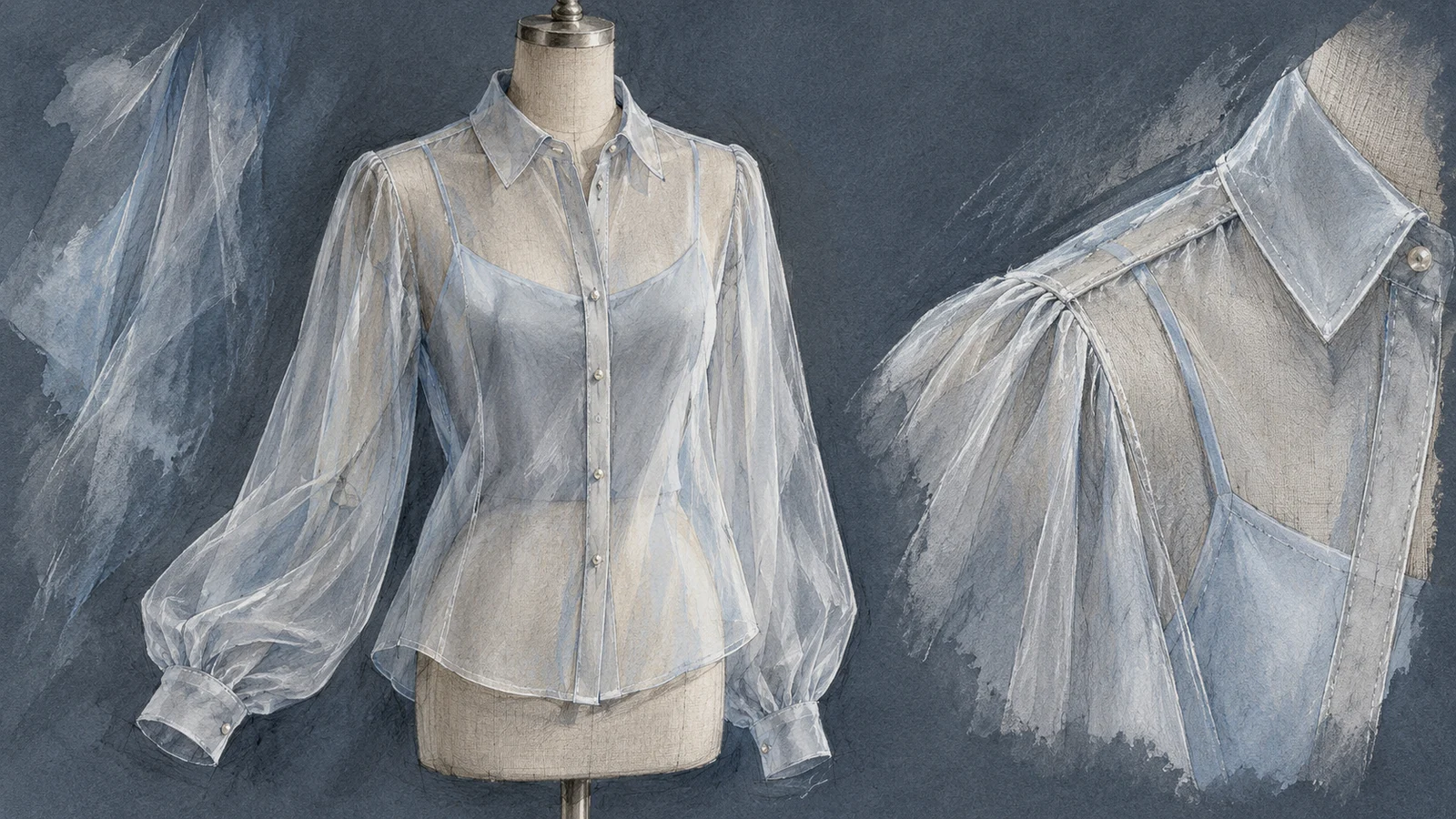
Sheer blouse design makes internal construction part of the visible appearance. Seam allowances, facings, labels and support may show through the shell. A sketch that leaves those elements invisible can create an incomplete expectation of the finished garment.
Define what the wearer is expected to see
State whether the blouse is intentionally transparent, partly lined or designed for a separate underlayer. Identify areas where coverage matters and how it will be reviewed. “Lightweight” and “opaque” describe different properties; one does not establish the other.
For an illustrative blouse with an unlined sleeve and lined body, mark the lining boundary in the technical views. Discuss how that boundary should appear through the shell. A hidden line on the drawing may become a visible colour or thickness change in the actual garment.
Treat the seam finish as a design choice
Evaluate the outside and inside together. A seam finish can change visible width, texture and bulk. Avoid specifying a particular finish as universally best for all sheer fabrics; the material, seam shape and intended appearance need review.
Trial a relevant seam and crossing point in the selected cloth. Check the assembled result under consistent lighting and against an agreed background or underlayer. Record what was used so the comparison can be repeated.
Inspect support, facings and labels
A collar support, placket layer or label may appear darker or more solid through the shell. Identify where such elements are needed and review their visibility. Moving a label or changing a facing width is a design and construction decision that should appear in the current specification.
When a sample has puckered seams, keep the observation separate from its diagnosis. Coats’ seam-puckering guidance describes several possible mechanisms, including tension, material displacement and feeding effects. Appearance alone does not identify which one applies to a particular sample.
Review the layers as an assembled system
Check that shell and lining work together during the intended movement. Observe pulling, bunching, edge visibility and coverage. A lining that looks suitable as a swatch may affect the hang or movement once attached.
Where the garment relies on a separate camisole or other underlayer, make that expectation clear in the development brief and later product information. Do not approve coverage from a photograph without knowing what was worn underneath.
Record the approval conditions
Identify the actual shell, lining and support materials in the reviewed sample. Record the fit reference, underlayer and relevant lighting conditions. If a substitute material was used, state which conclusions remain provisional.
Our guide to fabric behaviour behind a sketch helps organise the material review, while collar and neckline development addresses the supported areas of a blouse.
For KEYIDI TEXTILE project review, show these requirements within a complete tech pack or provide a physical sample garment. Our sampling guide explains the starting point and the additional project information to prepare.
Ready to Discuss Your Next Collection?
Send your garment brief, tech pack or physical sample details, fabric requirements, and target quantities for review.
Formal development requires a complete production-ready tech pack with specifications, or a physical sample garment. Concept sketches alone are not sufficient to start development.
Send Production Enquiry ↗Or email us directly at info@keyiditextile.com